MEEKER | A community coffee talk Friday, Feb. 6 in Meeker will focus on carbon credits and how they can be used as a tool to pay for land restoration and carbon reduction, particularly in rural and fire-impacted areas.
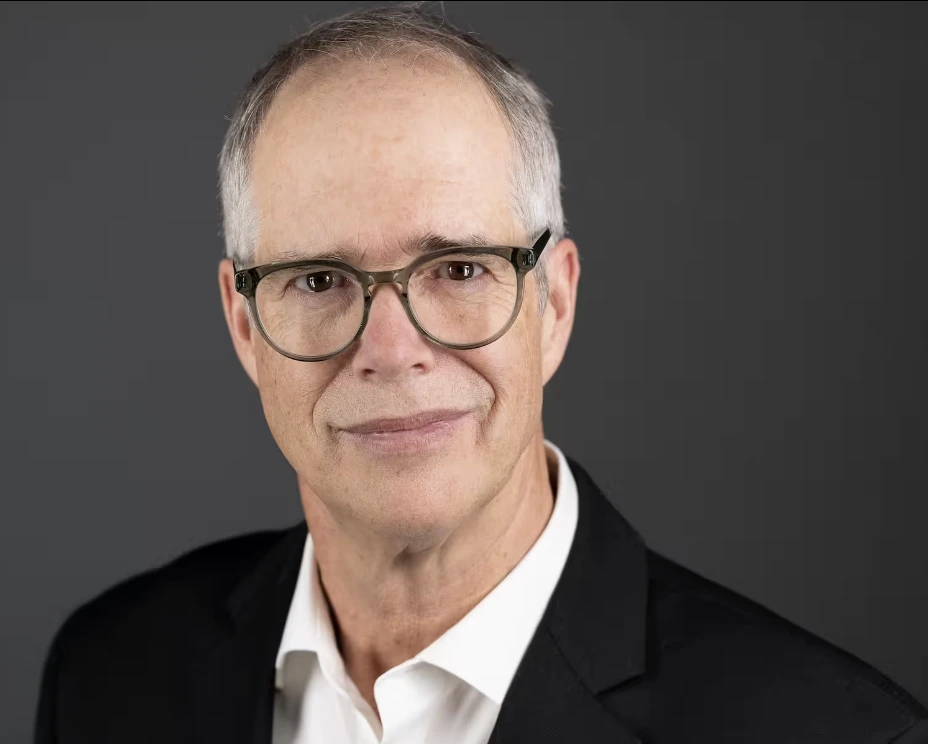
Bob Lawrence, who works in land restoration and carbon project development for Land and Carbon, Inc., will be the speaker at Streamline Realty (600 Main St.) in Meeker at 8 a.m.. The informal talk is aimed at helping residents and landowners better understand what carbon credits are, how they work, and how revenue from carbon credits can support restoration of burned areas and degraded land locally.
In simple terms, Lawrence explained that a carbon credit represents “one ton of carbon dioxide removed from the atmosphere and captured, in our case, in soils.” Those credits are measured, verified, and issued through a registry after going through what he described as a rigorous review and verification process.
Once issued, carbon credits can be purchased by a wide range of buyers, including companies, organizations, government entities, and individuals to offset emissions they cannot fully eliminate.
“You hear about net zero goals that companies have,” Lawrence said. “Those net zero goals mean we’ve reduced our emissions as much as we’re able. And then for those remaining emissions, those hard-to-abate emissions, we’ve offset those with carbon credits.”
Individuals may also choose to buy credits to offset emissions from their personal activities, such as air travel, Lawrence added.
Lawrence walked through how carbon credits are measured and verified, emphasizing that the process relies on both modeling and physical soil sampling. Project developers first establish a baseline by taking deep soil core samples to determine how much carbon is already present in the ground.
“That gets submitted to an independent third-party verifier, not affiliated with the carbon credit registries, not affiliated with us,” Lawrence said. The verifier reviews the data to ensure it meets required standards.
Over time, carbon levels are re-measured in the same locations to confirm how much additional carbon has been stored. “The difference between the carbon that was there at baseline and at five years…will be the amount of carbon credits that are issued for a project for the first five years,” he said. In the interim, modeled annual credits can be issued and sold. These credits are then “trued up” when soil carbon is re-measured in five years by field sampling.
According to Lawrence, rural communities like Meeker are particularly well positioned to benefit from carbon credit programs because of opportunities on ranch, grazing, and rangelands.
“One of the opportunities for carbon credits is for projects that are on degraded or burned ranch lands, grazing lands, range lands,” Lawrence said. He added that restoring vegetation is central to building soil carbon.
Lawrence pointed to wildfire recovery as a key local application. “The relevance and why they’re so great for communities like Meeker…is that those carbon credits…help pay for the land restoration and the revegetation,” he said, referencing areas impacted by recent fires.
Lawrence said his work with Land and Carbon centers on a science-driven approach that combines proven and innovative land management practices to restore degraded or burned land while increasing soil carbon storage. Projects are tailored to the specific characteristics of each property to optimize restoration, revegetation, and the generation of carbon credits.
According to Lawrence, carbon dioxide already in the atmosphere is put back to work on the land as soil carbon through practices such as reseeding, regenerative grazing, soil amendments, erosion control, water management, soil preparation, and invasive species control. By evaluating and combining multiple practices into an integrated plan, projects are designed to reduce the risk associated with relying on a single method while significantly increasing soil carbon gains per acre.
Lawrence said collaboration is a key component of the company’s approach. Land and Carbon works closely with landowners, ranchers, farmers, community members, and agencies from the outset of each project, with the goal of building on local knowledge and experience rather than replacing it.
He also emphasized that the company’s business model is structured to reduce barriers to participation. Land and Carbon covers the upfront costs and expenses associated with project development and land restoration. Revenue generated from the sale of carbon credits is used to help fund that restoration, and a percentage of the gross revenue is shared with the landowner without deducting project costs.
Under this model, Lawrence said, the company assumes both the financial and technical risk, allowing landowners to focus on land recovery and long-term productivity. He described the approach as hands-on and field-based, with an emphasis on doing the work directly and in collaboration with the people living and working on the land.
Revenue from carbon credits varies depending on acreage, soil conditions, and project length, which can range from 15 to 30 years. Lawrence said income is shared between the project developer and landowner and is designed to supplement restoration efforts.
“It’s additional revenue that the landowner receives in addition to having the ranch restored and revegetated,” he said.
Looking ahead, Lawrence said high-quality carbon credits are expected to grow in value. “The value of those carbon credits has continued to steadily increase, and are projected to steadily increase,” he said, citing rising demand tied to corporate net-zero commitments.
For those interested in learning more, Lawrence said education is the first step. Part of the upcoming coffee talk will focus on answering basic questions about whether carbon credits are real and how they are created.
“The purpose of this talk is to help educate people about carbon credits and how they might be helpful and useful for people in the community and ranchers to recover…and restore their land,” Lawrence said.
The coffee talk will be held at 8 a.m. Friday, Feb. 6 at Streamline Realty and is open to the public.